Buy ackack.eu ?
We are moving the project
ackack.eu .
Are you interested in purchasing the domain
ackack.eu ?
domain@kv-gmbh.de · 0541-91531010
Buy ackack.eu ?
What is the difference between standard enthalpy of formation, enthalpy of formation, and reaction enthalpy?
The standard enthalpy of formation is the enthalpy change that occurs when one mole of a compound is formed from its elements in their standard states. Enthalpy of formation is the enthalpy change that occurs when one mole of a compound is formed from its elements in their standard states, but it can be under non-standard conditions. Reaction enthalpy is the enthalpy change that occurs in a chemical reaction, which can be exothermic (heat is released) or endothermic (heat is absorbed). **
What is enthalpy?
Enthalpy is a thermodynamic property of a system that represents the total energy of the system, including its internal energy and the energy required to maintain constant pressure. It is often denoted as H and is expressed in units of joules. Enthalpy is important in understanding and analyzing processes such as chemical reactions and phase changes, as it provides a measure of the heat content of a system. In practical terms, enthalpy change is often used to quantify the heat absorbed or released during a process at constant pressure. **


Similar search terms for Enthalpy
Top-Angebote
Products related to Enthalpy:
-
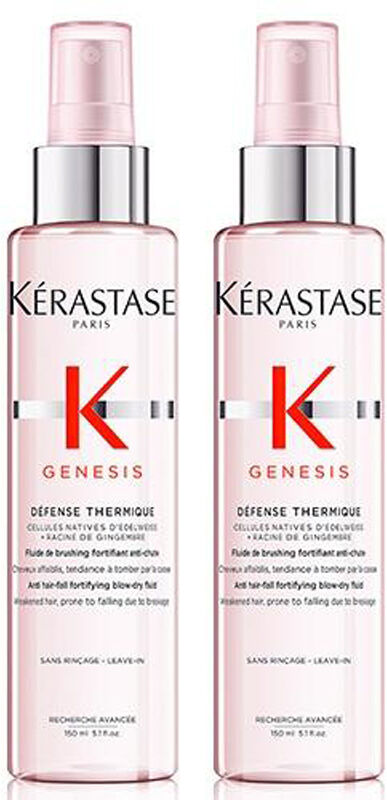
Kérastase Genesis Defense Thermique 150ml DoubleStock up and save with this double pack. The Kérastase Genesis Defense Thermique is a anti hair-fall intense fortifying blow dry fluid for weakened hair prone to falling. Providing anti-breakage protection, up to 88% hydration, 24hr protection against frizz without weighing the hair down and protect hair from heat up to 230C°. Give up to 99.3% less hair fall. Ingredients AQUA / WATER / EAU COCOS NUCIFERA OIL / COCONUT OIL AMODIMETHICONE POLYQUATERNIUM-37 PHENOXYETHANOL PROPYLENE GLYCOL DICAPRYLATE/DICAPRATE XYLITYLGLUCOSIDE SODIUM HYDROXIDE ANHYDROXYLITOL XYLITOL DIMETHICONE PEG-7 PHOSPHATE PPG-1 TRIDECETH-6 TRIDECETH-6 BEHENTRIMONIUM CHLORIDE LIMONENE XYLOSE ETHYLHEXYLGLYCERIN SORBITAN OLEATE LINALOOL ISOPROPYL ALCOHOL CETRIMONIUM CHLORIDE GLYCERIN HYDROLYZED VEGETABLE PROTEIN PG-PROPYL SILANETRIOL BENZYL SALICYLATE COUMARIN ZINGIBER OFFICINALE ROOT EXTRACT / GINGER ROOT EXTRACT CITRAL BENZYL ALCOHOL CITRONELLOL BENZYL BENZOATE LEONTOPODIUM ALPINUM CALLUS CULTURE EXTRACT POTASSIUM SORBATE TOCOPHEROL CITRIC ACID XANTHAN GUM DIPEPTIDE DIAMINOBUTYROYL BENZYLAMIDE DIACETATE PARFUM / FRAGRANCE55,50 £*Shipping: 0,00 £Secure redirect to the provider
-
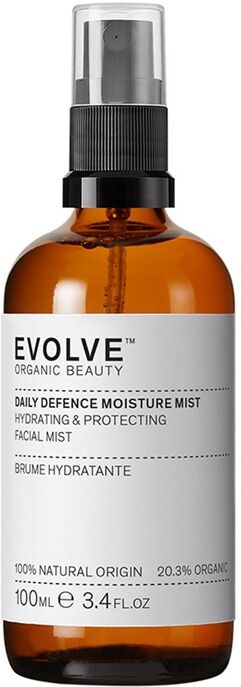
Evolve Beauty Daily Defense Moisture Mist 100mlWith a host of powerful green ingredients, this protective facial mist works to strengthen and balance the skin’s microbiota to help protect your complexion against pollution and aggressive chemicals. The luxurious Daily Defense Moisture Mist contains organic Mexican cactus elixir to calm irritated skin and boost hydration. Prebiotics from chicory root preserve the skin’s natural beauty and nourish its barrier, while hyaluronic acid delivers much-needed moisture. This skin-loving mist is delicately fragranced with soothing orange and rose flower waters for a delightfully sensorial experience. Suitable for all skin types. Vegan. Cruelty free. Handmade in Hertfordshire, England. 100% natural, 20% organic. Ingredients Aqua (water), Rosa Damascena Flower Water*, Citrus Aurantium Amara Flower Water*, Pentylene Glycol (from Sugar Cane), Inulin, Sodium Hyaluronate, Opuntia Ficus Indica Stem Extract*, Glycerin**, Fructose.21,00 £*Shipping: 2,95 £Secure redirect to the provider
-
Cozy Casa Charm Self Defense Finger Ring Outdoor Survival Window Breaker Cats Ear Metal Defense Ring For Personal Safety goldStay safe and prepared with the SelfDefense Finger Ring. Designed for adults who value safety and security, this ring serves as a discreet yet effective selfdefense tool. Whether you're out on a hike or walking through the city, this compact device...29,97 $*Shipping: 0,00 $Secure redirect to the provider


-
What is the difference between bond enthalpy and formation enthalpy?
Bond enthalpy is the energy required to break a specific chemical bond in a molecule, while formation enthalpy is the energy change when one mole of a compound is formed from its elements in their standard states. Bond enthalpy is specific to a particular bond within a molecule, while formation enthalpy is a measure of the overall energy change in forming a compound. Bond enthalpy is typically measured in kilojoules per mole (kJ/mol), while formation enthalpy is also measured in kilojoules per mole (kJ/mol). **
-
What is Hess's law for standard formation enthalpy and combustion enthalpy?
Hess's law states that the total enthalpy change for a reaction is the same regardless of the number of steps taken to reach the final products. This principle can be applied to standard formation enthalpies and combustion enthalpies by using a series of known enthalpy changes to calculate the overall enthalpy change for a reaction. By manipulating and combining these known enthalpies, Hess's law allows us to determine the enthalpy change for reactions that may not be easily measured directly. **
-
What is the difference between standard formation enthalpy and enthalpy change?
Standard formation enthalpy is the enthalpy change that occurs when one mole of a compound is formed from its elements in their standard states. It is a specific type of enthalpy change that is measured under standard conditions. Enthalpy change, on the other hand, is a more general term that refers to the overall change in enthalpy of a system during a chemical reaction or process, regardless of whether it involves formation of a compound or not. Enthalpy change can be positive (endothermic) or negative (exothermic), depending on whether energy is absorbed or released during the process. **
-
How to calculate the reaction enthalpy from the molar bond enthalpy?
To calculate the reaction enthalpy from the molar bond enthalpy, you need to consider the difference between the sum of the bond enthalpies of the reactants and the sum of the bond enthalpies of the products. First, calculate the total bond enthalpy of all the bonds broken in the reactants, and then calculate the total bond enthalpy of all the bonds formed in the products. The reaction enthalpy is then the difference between these two values, with the bond enthalpies of the products subtracted from the bond enthalpies of the reactants. This calculation allows you to determine whether a reaction is exothermic (releasing heat) or endothermic (absorbing heat). **


What is Hess's law equation for standard formation enthalpy and combustion enthalpy?
Hess's law states that the overall enthalpy change for a reaction is the same regardless of the number of steps taken to reach the final products. For standard formation enthalpy, the equation is: ∆Hf°(products) = ∑∆Hf°(products) - ∑∆Hf°(reactants). For combustion enthalpy, the equation is: ∆Hcomb° = ∑∆Hf°(products) - ∑∆Hf°(reactants). These equations allow us to calculate the enthalpy change of a reaction using the enthalpies of formation of the reactants and products. **
What is the difference between standard enthalpy of formation and enthalpy change?
The standard enthalpy of formation is the enthalpy change that occurs when one mole of a compound is formed from its elements in their standard states. It is a specific type of enthalpy change that is measured under standard conditions. On the other hand, enthalpy change refers to the overall change in enthalpy of a system during a chemical reaction or process, which can include various types of enthalpy changes such as enthalpy of reaction, enthalpy of combustion, or enthalpy of solution. In summary, standard enthalpy of formation is a specific type of enthalpy change that relates to the formation of a compound from its elements, while enthalpy change is a broader term that encompasses various types of enthalpy changes in a system. **
Top-Angebote
Products related to Enthalpy:
-
Uplifted Finds Three Defense High Performance Litter Box Cushion Three Defense High Performance Litter Box CushionKeep your pet's bathroom area clean and odorfree with the ThreeDefense HighPerformance Litter Box Cushion. Specifically tailored to fit the exact contours and entryway of the MiniC smart automatic litter box, this highperformance placement pad...167,97 $*Shipping: 0,00 $Secure redirect to the provider
-
Kérastase Genesis Defense Thermique 150ml DoubleStock up and save with this double pack. The Kérastase Genesis Defense Thermique is a anti hair-fall intense fortifying blow dry fluid for weakened hair prone to falling. Providing anti-breakage protection, up to 88% hydration, 24hr protection against frizz without weighing the hair down and protect hair from heat up to 230C°. Give up to 99.3% less hair fall. Ingredients AQUA / WATER / EAU COCOS NUCIFERA OIL / COCONUT OIL AMODIMETHICONE POLYQUATERNIUM-37 PHENOXYETHANOL PROPYLENE GLYCOL DICAPRYLATE/DICAPRATE XYLITYLGLUCOSIDE SODIUM HYDROXIDE ANHYDROXYLITOL XYLITOL DIMETHICONE PEG-7 PHOSPHATE PPG-1 TRIDECETH-6 TRIDECETH-6 BEHENTRIMONIUM CHLORIDE LIMONENE XYLOSE ETHYLHEXYLGLYCERIN SORBITAN OLEATE LINALOOL ISOPROPYL ALCOHOL CETRIMONIUM CHLORIDE GLYCERIN HYDROLYZED VEGETABLE PROTEIN PG-PROPYL SILANETRIOL BENZYL SALICYLATE COUMARIN ZINGIBER OFFICINALE ROOT EXTRACT / GINGER ROOT EXTRACT CITRAL BENZYL ALCOHOL CITRONELLOL BENZYL BENZOATE LEONTOPODIUM ALPINUM CALLUS CULTURE EXTRACT POTASSIUM SORBATE TOCOPHEROL CITRIC ACID XANTHAN GUM DIPEPTIDE DIAMINOBUTYROYL BENZYLAMIDE DIACETATE PARFUM / FRAGRANCE55,50 £*Shipping: 0,00 £Secure redirect to the provider
-
Evolve Beauty Daily Defense Moisture Mist 100mlWith a host of powerful green ingredients, this protective facial mist works to strengthen and balance the skin’s microbiota to help protect your complexion against pollution and aggressive chemicals. The luxurious Daily Defense Moisture Mist contains organic Mexican cactus elixir to calm irritated skin and boost hydration. Prebiotics from chicory root preserve the skin’s natural beauty and nourish its barrier, while hyaluronic acid delivers much-needed moisture. This skin-loving mist is delicately fragranced with soothing orange and rose flower waters for a delightfully sensorial experience. Suitable for all skin types. Vegan. Cruelty free. Handmade in Hertfordshire, England. 100% natural, 20% organic. Ingredients Aqua (water), Rosa Damascena Flower Water*, Citrus Aurantium Amara Flower Water*, Pentylene Glycol (from Sugar Cane), Inulin, Sodium Hyaluronate, Opuntia Ficus Indica Stem Extract*, Glycerin**, Fructose.21,00 £*Shipping: 2,95 £Secure redirect to the provider
-
What is the difference between standard enthalpy of formation, enthalpy of formation, and reaction enthalpy?
The standard enthalpy of formation is the enthalpy change that occurs when one mole of a compound is formed from its elements in their standard states. Enthalpy of formation is the enthalpy change that occurs when one mole of a compound is formed from its elements in their standard states, but it can be under non-standard conditions. Reaction enthalpy is the enthalpy change that occurs in a chemical reaction, which can be exothermic (heat is released) or endothermic (heat is absorbed). **
-
What is enthalpy?
Enthalpy is a thermodynamic property of a system that represents the total energy of the system, including its internal energy and the energy required to maintain constant pressure. It is often denoted as H and is expressed in units of joules. Enthalpy is important in understanding and analyzing processes such as chemical reactions and phase changes, as it provides a measure of the heat content of a system. In practical terms, enthalpy change is often used to quantify the heat absorbed or released during a process at constant pressure. **
-
What is the difference between bond enthalpy and formation enthalpy?
Bond enthalpy is the energy required to break a specific chemical bond in a molecule, while formation enthalpy is the energy change when one mole of a compound is formed from its elements in their standard states. Bond enthalpy is specific to a particular bond within a molecule, while formation enthalpy is a measure of the overall energy change in forming a compound. Bond enthalpy is typically measured in kilojoules per mole (kJ/mol), while formation enthalpy is also measured in kilojoules per mole (kJ/mol). **
-
What is Hess's law for standard formation enthalpy and combustion enthalpy?
Hess's law states that the total enthalpy change for a reaction is the same regardless of the number of steps taken to reach the final products. This principle can be applied to standard formation enthalpies and combustion enthalpies by using a series of known enthalpy changes to calculate the overall enthalpy change for a reaction. By manipulating and combining these known enthalpies, Hess's law allows us to determine the enthalpy change for reactions that may not be easily measured directly. **
Similar search terms for Enthalpy
-
Cozy Casa Charm Self Defense Finger Ring Outdoor Survival Window Breaker Cats Ear Metal Defense Ring For Personal Safety goldStay safe and prepared with the SelfDefense Finger Ring. Designed for adults who value safety and security, this ring serves as a discreet yet effective selfdefense tool. Whether you're out on a hike or walking through the city, this compact device...29,97 $*Shipping: 0,00 $Secure redirect to the provider
-
Kérastase Genesis Defense Thermique 150ml DoubleStock up and save with this double pack. The Kérastase Genesis Defense Thermique is a anti hair-fall intense fortifying blow dry fluid for weakened hair prone to falling. Providing anti-breakage protection, up to 88% hydration, 24hr protection against frizz without weighing the hair down and protect hair from heat up to 230C°. Give up to 99.3% less hair fall. Ingredients AQUA / WATER / EAU COCOS NUCIFERA OIL / COCONUT OIL AMODIMETHICONE POLYQUATERNIUM-37 PHENOXYETHANOL PROPYLENE GLYCOL DICAPRYLATE/DICAPRATE XYLITYLGLUCOSIDE SODIUM HYDROXIDE ANHYDROXYLITOL XYLITOL DIMETHICONE PEG-7 PHOSPHATE PPG-1 TRIDECETH-6 TRIDECETH-6 BEHENTRIMONIUM CHLORIDE LIMONENE XYLOSE ETHYLHEXYLGLYCERIN SORBITAN OLEATE LINALOOL ISOPROPYL ALCOHOL CETRIMONIUM CHLORIDE GLYCERIN HYDROLYZED VEGETABLE PROTEIN PG-PROPYL SILANETRIOL BENZYL SALICYLATE COUMARIN ZINGIBER OFFICINALE ROOT EXTRACT / GINGER ROOT EXTRACT CITRAL BENZYL ALCOHOL CITRONELLOL BENZYL BENZOATE LEONTOPODIUM ALPINUM CALLUS CULTURE EXTRACT POTASSIUM SORBATE TOCOPHEROL CITRIC ACID XANTHAN GUM DIPEPTIDE DIAMINOBUTYROYL BENZYLAMIDE DIACETATE PARFUM / FRAGRANCE51,80 £*Shipping: 0,00 £Secure redirect to the provider
-
What is the difference between standard formation enthalpy and enthalpy change?
Standard formation enthalpy is the enthalpy change that occurs when one mole of a compound is formed from its elements in their standard states. It is a specific type of enthalpy change that is measured under standard conditions. Enthalpy change, on the other hand, is a more general term that refers to the overall change in enthalpy of a system during a chemical reaction or process, regardless of whether it involves formation of a compound or not. Enthalpy change can be positive (endothermic) or negative (exothermic), depending on whether energy is absorbed or released during the process. **
-
How to calculate the reaction enthalpy from the molar bond enthalpy?
To calculate the reaction enthalpy from the molar bond enthalpy, you need to consider the difference between the sum of the bond enthalpies of the reactants and the sum of the bond enthalpies of the products. First, calculate the total bond enthalpy of all the bonds broken in the reactants, and then calculate the total bond enthalpy of all the bonds formed in the products. The reaction enthalpy is then the difference between these two values, with the bond enthalpies of the products subtracted from the bond enthalpies of the reactants. This calculation allows you to determine whether a reaction is exothermic (releasing heat) or endothermic (absorbing heat). **
-
What is Hess's law equation for standard formation enthalpy and combustion enthalpy?
Hess's law states that the overall enthalpy change for a reaction is the same regardless of the number of steps taken to reach the final products. For standard formation enthalpy, the equation is: ∆Hf°(products) = ∑∆Hf°(products) - ∑∆Hf°(reactants). For combustion enthalpy, the equation is: ∆Hcomb° = ∑∆Hf°(products) - ∑∆Hf°(reactants). These equations allow us to calculate the enthalpy change of a reaction using the enthalpies of formation of the reactants and products. **
-
What is the difference between standard enthalpy of formation and enthalpy change?
The standard enthalpy of formation is the enthalpy change that occurs when one mole of a compound is formed from its elements in their standard states. It is a specific type of enthalpy change that is measured under standard conditions. On the other hand, enthalpy change refers to the overall change in enthalpy of a system during a chemical reaction or process, which can include various types of enthalpy changes such as enthalpy of reaction, enthalpy of combustion, or enthalpy of solution. In summary, standard enthalpy of formation is a specific type of enthalpy change that relates to the formation of a compound from its elements, while enthalpy change is a broader term that encompasses various types of enthalpy changes in a system. **
* All prices are inclusive of VAT and, if applicable, plus shipping costs. The offer information is based on the details provided by the respective shop and is updated through automated processes. Real-time updates do not occur, so deviations can occur in individual cases. ** Note: Parts of this content were created by AI.